
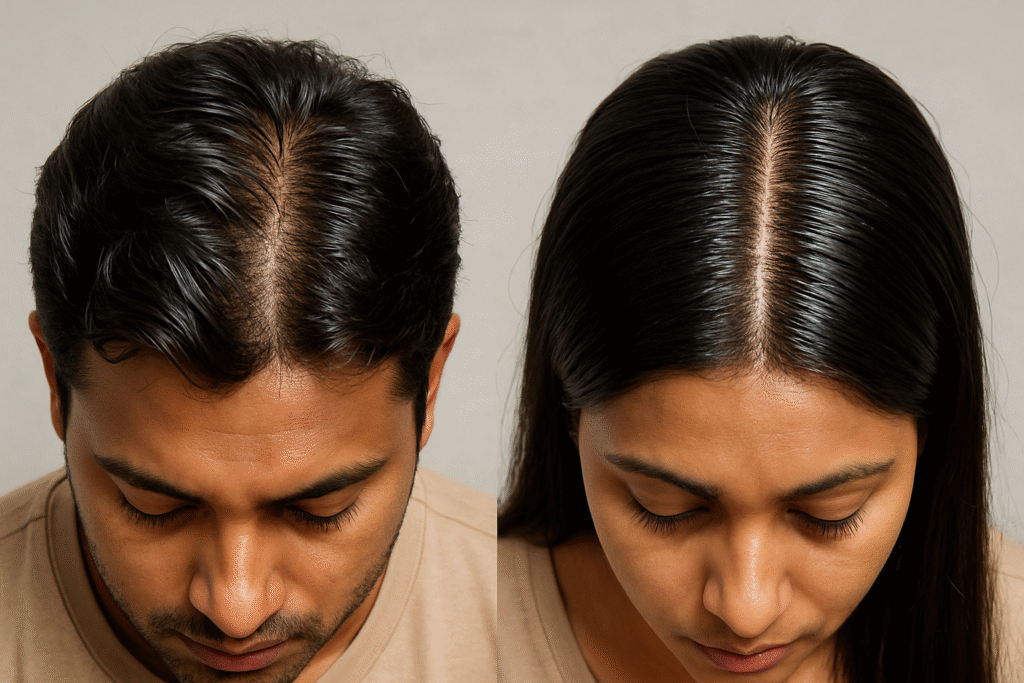
When your scalp starts to feel oily just hours after washing—or you notice your hair going limp within a day—your first instinct might be to scrub harder, shampoo more often, or skip anything that feels remotely like “moisture.” But here’s a question worth asking: Is your scalp truly greasy, or is it actually dehydrated?
The answer might surprise you. What we often mistake for excess oil could be our scalp’s desperate attempt to restore balance after being stripped dry.
In this article, we’ll unpack the real story behind oily scalps, the surprising role hydration plays, and how switching to gentler, scalp-supportive routines can bring long-term comfort.
1. Overwashing Might Be Making It Worse
It’s a habit many of us fall into: the more our scalp feels greasy, the more we feel the need to wash. In some cases, people shampoo their hair daily or even twice a day—believing it’s the only way to stay “clean.”
But your scalp has its own intelligence. When natural oils (called sebum) are stripped away frequently, your body responds by producing more to compensate. This creates a frustrating cycle: shampoo → dry scalp → excess oil → more shampoo.
Overwashing doesn’t just strip oils—it can also damage the scalp barrier, leading to irritation and flaking that can easily be mistaken for dandruff. Ironically, the more you wash to remove oil, the more your scalp may produce.
Tip: Try gradually reducing wash frequency to every 2–3 days, using a mild, sulphate-free cleanser that cleanses without over-drying.
2. Clean Doesn’t Mean Oil-Free
Somewhere along the way, many of us equated cleanliness with the total absence of oil. But here’s the thing—your scalp needs oil.
Sebum isn’t “dirty.” It’s your body’s built-in moisturizer. It protects the skin, prevents water loss, and supports healthy hair growth. In fact, people with extremely dry scalps often experience itching, flaking, or even thinning hair due to lack of nourishment at the root level.
The problem arises when there’s an imbalance: too much or too little oil. And often, that imbalance comes from habits like harsh washing, lack of hydration, or overuse of styling products that clog the scalp.
Tip: Instead of aiming for an oil-free scalp, aim for a balanced scalp—one that feels comfortable, not dry or greasy, and doesn’t demand daily washing.
3. Hydration Isn’t the Enemy of Oily Scalps
Here’s a misunderstood fact: oily scalps can still be dehydrated. In fact, many are.
Dehydration refers to the lack of water content in the skin, while oiliness is about sebum production. These two aren’t the same. Think of it like oily-but-thirsty skin on your face—tight, shiny, and often inflamed.
When your scalp is dehydrated, it can actually produce more oil as a protective response. This is why adding moisture—yes, even in the form of lightweight oils—can help calm things down.
Hydrating products can help restore the scalp’s barrier function and reduce the body’s need to overproduce sebum. Instead of smothering your scalp with heavy oils, look for leave-in, residue-free options that nourish the skin without clogging follicles.
Tip: Focus on hydration from both inside and outside—drink enough water, and use topical hydration to keep your scalp comfortable.
4. Lightweight Oils vs. Traditional Oiling
In traditional hair care routines, heavy oiling was often done before washing—leaving coconut, castor, or mustard oil on the scalp for hours or overnight. While these methods have their place, they can feel too heavy for modern routines and aren’t always the best for oily-prone scalps.
Here’s where lightweight, quick-absorbing products come in. These oils—or more precisely, elixirs—are designed to deliver nutrients directly to the scalp without creating build-up or weighing down the hair. They mimic the skin’s own oils and often include botanical extracts, vitamins, and minerals that support scalp comfort and hair vitality.
Products like Amrutveni Hair Elixir have gained attention from users with oily scalps who want the benefits of nourishment without the greasy after-feel. These types of formulations work well for people who wash less often but still want daily scalp support.
Tip: Try applying a small amount of lightweight elixir to the scalp 20–30 minutes before washing, or use a few drops as a leave-in if the scalp feels tight or flaky.
5. Scalp Oiliness vs. Scalp Health: Know When to Shift Your Routine
Not all scalp oiliness is the same. Sometimes, it’s temporary—linked to hormonal changes, diet, or even weather. But when you start noticing discomfort, persistent build-up, or breakouts around your hairline, it may be time to rethink your approach.
Many people start with general hair care—focusing on shampoos, conditioners, or masks—but overlook the scalp entirely. If your scalp is sending signals like frequent oiliness, itching, or sudden hair fall, that’s a cue to switch to a scalp-first routine.
This means using products formulated specifically for the scalp, not just the strands. These include exfoliating scalp scrubs, leave-in serums, and elixirs that support scalp function without clogging pores.
Tip: Just like you wouldn’t skip skincare for your face, don’t skip care for your scalp. It’s where healthy hair begins.
6. What Users Are Saying
Many users who felt stuck in the overwash-oil cycle have made small changes that brought visible comfort.
One regular user of a lightweight scalp product shared this:
“My scalp used to feel oily and itchy by the end of the day, even though I washed every morning. I was sceptical about using any oil, but I started applying just a few drops of the Amrutveni Hair Elixir before a wash. It felt different—not heavy or sticky. Over time, I realized I didn’t need to wash every day anymore. My scalp just felt calmer.”
This kind of feedback echoes what research and experience show—balance is key. And sometimes, oily scalps aren’t oily because they’re too hydrated, but because they’re not hydrated enough.
7. When the Problem Isn’t Just Oil
In some cases, what looks like oiliness may be masking other scalp concerns. Fungal overgrowth, clogged follicles, or inflammation can all result in greasy roots that feel sore or tender. If your scalp has started to feel different—especially with sudden changes in oiliness—it’s a good idea to pay closer attention.
Subtle lifestyle changes like reducing stress, staying hydrated, getting enough sleep, and eating a mineral-rich diet (especially zinc and B vitamins) can support overall scalp function.
And while you don’t need to overhaul your routine overnight, switching to gentler, more scalp-aware products can make a noticeable difference over time.
In Summary: Greasy or Dehydrated?
Oily scalps are often misunderstood. What feels greasy might actually be a sign that your scalp is craving hydration—not punishment. Instead of stripping it dry, listen to it. Balance is better than overcorrection.
Try washing less, nourishing more, and paying attention to how your scalp feels, not just how it looks. Whether you’re using hydrating mists, lightweight oils, or residue-free products like Amrutveni Elixir and Nectar, the goal is simple: comfort, balance, and better scalp care.
You don’t have to live at either extreme—stripped and dry or weighed down and greasy. Somewhere in between is a scalp that feels calm, balanced, and nourished. That’s the place to aim for. And once you get there, your hair will thank you too.