
Lice Infestations in Children: Causes, Treatments, and a Biotechnology-Based Remedy
Introduction
Head lice infestation (pediculosis capitis) is one of the most common parasitic conditions in children worldwide, especially among school-aged kids cps.ca. It is caused by the head louse Pediculus humanus capitis, a blood-sucking ectoparasite that lives on the scalp and feeds on human blood. Unlike body lice, head lice are not known to transmit any diseases cps.ca. However, they cause intense itching due to allergic reactions to louse saliva, and can lead to scalp irritation, secondary bacterial infection from scratching, and significant social embarrassment for children and parents iafaforallergy.comiafaforallergy.com. Lice infestations occur across all socio-economic groups and are not a sign of poor hygiene cps.ca. Close head-to-head contact (common during play or school activities) is the primary mode of transmission; lice do not jump or fly but crawl from one scalp to another. Indirect spread can also occur through sharing personal items like combs, hairbrushes, hats, or pillows iafaforallergy.comiafaforallergy.com.
Epidemiologically, pediculosis is a significant issue in many countries including India. Warm climate, high population density, and school crowding facilitate the spread of lice. Surveys in India indicate a high burden among children: for example, one study in rural North India found that over 70% of girls (and about 29% of boys) aged 5–15 examined had active head lice infestation pubmed.ncbi.nlm.nih.gov. Younger children are often most affected – in the same study, 42% of children aged 5–7 were infested pubmed.ncbi.nlm.nih.gov. Similar high prevalence rates have been reported in other regions and settings, with girls often more frequently infested than boys (possibly due to hair length and social play habits) pubmed.ncbi.nlm.nih.gov. The problem imposes a substantial cost and inconvenience to families and schools, with the United States spending an estimated $500 million annually on treatments cps.ca. Given the pervasive nature of this issue, it is critical to understand the causes and life cycle of lice, evaluate the efficacy and safety of conventional treatments, and explore new remedies that are both effective and child-friendly.
Causes and Life Cycle of Head Lice Infestation
A head lice infestation begins when one or more live lice transfer to a child’s hair. Lice are small (2–4 mm long) six-legged insects that reside close to the scalp for warmth and food cps.ca. They feed on blood every few hours by biting the scalp and injecting saliva, which triggers itching in the host iafaforallergy.com. Female head lice lay eggs (nits) attached firmly to hair shafts near the scalp with a waterproof, sticky cement. A single female can lay about 6–10 eggs per day, so infestations can build up quickly iafaforallergy.com. The eggs incubate for ~7–10 days, after which nymphs hatch. These nymphs mature into adult lice in about 9–12 days, completing the life cycle iafaforallergy.com. Adult lice live for roughly 3–4 weeks on the scalp if not treated iafaforallergy.com. During that time, each female can continue to produce eggs daily, so populations can explode if not interrupted.
Transmission: The primary cause of spread is direct hair-to-hair contact. Lice cannot jump or fly; they simply crawl from one hair to another when people’s heads touch. This makes young children in close contact (e.g. during play, hugging, or group activities) especially susceptible. Outbreaks are common in schools and daycare centers, where children interact closely. Indirect transmission is less common but possible via fomites – for instance, sharing combs, hair accessories, hats, or bedding can allow a louse to transfer to a new hos tiafaforallergy.com. Lice can survive around 1–2 days off the human host, so the risk from inanimate objects is lower than from direct contact, but still notable.
Symptoms: The hallmark symptom of lice infestation is intense scalp itching, often most pronounced behind the ears and at the nape of the neck. The itching is due to an allergic reaction to louse bites and saliva; interestingly, this reaction may take 4–6 weeks to develop the first time, so a new infestation might not itch immediately iafaforallergy.com. Other signs include a crawling sensation on the scalp and nits (eggs) visible on hair strands. The nits are tiny (about 0.8 mm), oval, and usually yellow-white. They are often seen cemented near the hair root, especially at the back of the neck or behind the ears. Live lice can sometimes be seen moving on the scalp or on combs, though they move quickly and are adept at hiding. Persistent scratching may lead to red bite marks, excoriations, or small red bumps and rashes on the scalp and neck iafaforallergy.com. If these open wounds get infected with bacteria, secondary impetigo or enlarged lymph nodes can result, which sometimes complicates heavy infestations.
Scalp Environment: Recent research has even explored the interaction between head lice and the scalp’s microbial environment. The scalp is home to a community of bacteria and fungi (microbiota) that maintain scalp health. Interestingly, children with head lice show alterations in their scalp microbiota compared to uninfested children pubmed.ncbi.nlm.nih.gov. For example, one study noted certain bacteria (like Staphylococcus capitis) were more abundant on lice-infested scalps, whereas some commensal microbes were less prevalent pubmed.ncbi.nlm.nih.gov. This suggests that lice may create a micro-environment on the scalp that differs from normal, possibly due to the inflammation and secretions they induce. While the clinical implications are still under investigation, this finding hints that the scalp’s biochemical and microbial milieu is an important factor in pediculosis. It also raises an intriguing question: could altering the scalp environment help combat lice? We will revisit this idea when discussing new biotechnological treatments.
Conventional Treatments and Limitations
Treating head lice typically involves two strategies: pediculicidal agents to kill the parasites (and sometimes their eggs), and physical removal of lice and nits (usually by wet combing). A variety of chemical and non-chemical remedies are available worldwide. Here we focus on common conventional treatments – particularly those used in India and globally – and their mechanisms, effectiveness, and drawbacks.
Insecticidal Treatments (Pediculicides)
For decades, the first-line treatments for head lice have been topical insecticidal lotions or shampoos. These are applied to the hair and scalp to kill the lice. The most widely used compounds include permethrin (1%), pyrethrins (natural pyrethroid extracts from chrysanthemum flowers, often combined with piperonyl butoxide), and malathion (0.5%). In some countries, other pediculicides like lindane (γ-hexachlorocyclohexane), benzyl benzoate, crotamiton, ivermectin or spinosad have also been used. Each of these has a distinct mode of action and safety profile:
- Permethrin (1% lotion/cream rinse): Permethrin is a synthetic pyrethroid insecticide. It acts as a neurotoxin to lice by binding to voltage-gated sodium channels in the parasite’s nerve cells, causing prolonged depolarization and paralysis of the louse cps.ca. Essentially, it “stuns” and eventually kills lice. Permethrin has been a workhorse treatment and is generally considered safe for humans because it has very low toxicity to mammals cps.ca. It is poorly absorbed through human skin (minimal percutaneous absorption) and can be used in young children (as young as 2 months old, per many guidelines)cps.ca. Typically, 1% permethrin lotion is applied to washed, towel-dried hair and left on for about 10 minutes before rinsing off cps.ca. A single treatment can kill active lice, but permethrin does not reliably kill louse eggs (nits), so a repeat application after 7–10 days is often recommended to kill any newly hatched nymphs mayoclinic.org.
Side effects and limitations: Permethrin’s safety profile is favorable, but it can cause localized scalp reactions in some patients. Common side effects include scalp irritation – itching, redness, burning or stinging sensations on the treated areas mayoclinic.org. These effects are usually mild and transient, but in some cases the treatment can temporarily worsen the itch and redness that accompany lice infestation itself medicinenet.com. Allergic contact dermatitis to permethrin is rare but possible. Another major limitation of permethrin is the development of lice resistance. Over years of widespread use, lice populations in many regions have evolved genetic mutations in their sodium channel (known as kdr mutations) that confer resistance to permethrin and related pyrethroids cps.ca. Indeed, increasing reports of permethrin-resistant “super lice” have emerged worldwide cps.ca. In parts of the USA, Europe, and India, treatment failure with permethrin due to resistance is not uncommon, prompting the need for alternative agents or combination therapies.
- Natural Pyrethrins: These are extracts from the chrysanthemum flower that contain pyrethrin I/II, which are also neurotoxic to lice. They are often formulated with piperonyl butoxide (which inhibits louse detoxification enzymes) to boost efficacy. Pyrethrins have a similar mechanism to permethrin and share a similar safety profile. They are fast-acting and kill lice but have no ovicidal activity (they don’t reliably kill eggs), hence a second treatment is required after ~9 days. Pyrethrins are degraded by light and air, so they have shorter residual activity. As with permethrin, resistance to pyrethrins has been documented in many countries (cross-resistance usually occurs because the mechanism overlaps with permethrin) cps.ca. Side effects are likewise mild scalp irritation in some users cps.ca. One caution is that pyrethrin products are contraindicated in persons with chrysanthemum or ragweed allergies.
- Malathion (0.5% lotion): Malathion is an organophosphate pediculicide. It kills lice by irreversibly inhibiting acetylcholinesterase, an essential enzyme in the insect nervous system, leading to an accumulation of acetylcholine and uncontrolled nerve firing that paralyzes and kills the louse dailymed.nlm.nih.gov. Malathion is a potent louse killer and also has ovicidal activity – its formulation can kill or weaken eggs as well. It is usually applied to dry hair and left on for 8–12 hours (often overnight) before washing off, so that it penetrates and dries on the hair. Malathion has been shown to be highly effective even against some permethrin-resistant lice strains discovery.researcher.life. However, malathion lotion comes with several drawbacks. Firstly, it contains a high percentage of isopropyl alcohol (78% in the formulation) and other solvents dailymed.nlm.nih.gov, making it flammable and giving it a strong, unpleasant chemical odor (often described as similar to rotten eggs or garlic due to sulfur compounds). Users must take care to avoid open flames, hair dryers, or smoking during treatment due to fire risk dailymed.nlm.nih.gov. Secondly, malathion can cause more severe irritation than permethrin; if left on too long or used on sensitive skin, it may result in skin irritation or even chemical burns. Indeed, the FDA packaging warns that “chemical burns (including second-degree burns) and stinging sensations may occur with the use of Malathion Lotion”dailymed.nlm.nih.gov. For this reason, malathion is contraindicated in infants and very young children (generally not used under 2 years of age) dailymed.nlm.nih.gov, and it should only be applied under adult supervision dailymed.nlm.nih.gov. Despite these concerns, malathion remains a recommended second-line treatment in some areas for resistant infestations – but user compliance can be an issue due to the odor and the need for lengthy application. Resistance to malathion is less widespread than to permethrin, but there have been reports of malathion-resistant lice as wellphthiraptera.myspecies.info.
- Lindane (1% shampoo/lotion): Lindane is an older organochlorine insecticide that was once commonly used for lice and scabies. It is effective at killing lice, but it is also the most toxic to humans of the traditional pediculicides. Lindane can be absorbed through the skin and, in excessive amounts, can cause neurotoxicity (seizures, especially in young children or if misused). Due to safety concerns, lindane is no longer recommended as a first-line therapy in many countries, and some (like the US and EU nations) have severely restricted or banned its use for lice. In India, lindane usage has dramatically declined and permethrin has largely replaced it in practice. We mention it historically, but it is generally avoided nowadays for pediatric use.
- Other treatments: Several newer pediculicidal agents have been introduced, particularly in Western countries, aiming to overcome resistance and improve safety. Benzyl alcohol 5% lotion kills lice by asphyxiation (it blocks their breathing spiracles) but doesn’t kill nits, requiring re-treatment. Spinosad 0.9% topical suspension (derived from bacterial fermentation by Saccharopolyspora) is a neurotoxin to lice that has ovicidal activity and often does not require combing; it has shown high efficacy but is expensive journals.lww.com. Topical ivermectin 0.5% lotion and oral ivermectin have also been used – ivermectin paralyzes lice by binding to glutamate-gated chloride channels. Oral ivermectin is generally reserved for refractory cases or mass treatment in epidemics. In India, some of these newer products (spinosad, topical ivermectin) are not yet widely available, and permethrin remains the mainstay in most health settings ijdvl.com. Traditional remedies like sulfur ointments or herbal preparations are also occasionally used anecdotally.
Effectiveness and Resistance: When used correctly, the above pediculicides can cure a lice infestation in the majority of cases. For example, permethrin 1% applied twice (day 0 and day 7) can achieve cure rates above 90% in areas without resistance. Malathion 0.5% can also clear >90% of cases with one treatment in susceptible populations. However, improper application (insufficient quantity, not following instructions, or reinfestation from untreated contacts) often leads to failure. A significant modern problem is insecticide resistance, as mentioned. Genetic studies have found high prevalence of knockdown-resistant (kdr) mutations in lice from many parts of India, Europe, and North America cps.ca. In one survey from 2016–2021, permethrin resistance alleles were detected in the vast majority of lice tested, explaining many treatment failures cps.ca. Resistance has made some over-the-counter remedies noticeably less effective, giving rise to the term “super lice.” This has encouraged the use of alternate strategies like combination therapy (e.g. permethrin + trimethoprim-sulfamethoxazole, though this is controversial cps.ca) or switching to newer agents. It has also driven interest in non-chemical and natural treatments, which we will discuss shortly biomeddermatol.biomedcentral.com.
Side Effects and Impact on Scalp/Hair: Chemical pediculicides, while generally safe when used as directed, are not free from side effects. Beyond the aforementioned skin irritation and rare burns, these products can be harsh on the scalp and hair. Many contain alcohols or solvents that dry out the hair and scalp, potentially causing excessive dryness, flaking, and rough hair texture after repeated use. Some children experience a tingling or mild burning sensation with permethrin application mayoclinic.org; if the scalp is already excoriated from scratching, the alcohol in the formulations can sting. Malathion’s odour and potential to irritate or even blister the skin are notable downsides dailymed.nlm.nih.gov. There are case reports of hair damage (like brittle hair or temporary shedding) after multiple rounds of strong treatments, although this is not well-studied clinically. Long-term impact of these treatments on children’s scalps is not fully characterized, but frequent re-treatment could conceivably disturb the scalp’s natural barrier and microbiome, possibly leading to dandruff or eczema in susceptible individuals. Indeed, any product causing repeated inflammation might contribute to a less healthy scalp environment over time.
Moreover, concerns about chemical exposure (even if minimal per dose) make some parents uneasy, especially when treating very young children or repeated infestations. For example, using lindane (if it were still used) or overusing malathion could theoretically have systemic effects, though standard use is considered safe. Nonetheless, the goal is always to have a treatment that is both effective and gentle on a child’s sensitive scalp and hair.
Physical Removal (Wet Combing and Others)
A cornerstone of lice management, whether using chemicals or not, is physical removal of lice and nits, typically by combing. Wet combing involves saturating the hair with water and often a lubricant (hair conditioner or oil) and then systematically combing through with a fine-toothed nit comb to remove live lice and eggs. This method can be time-consuming but is a chemical-free approach that can be quite effective if done thoroughly and regularly (e.g. every few days over 2–3 weeks). Combing is also used in combination with chemical treatments to ensure all nits are removed (since any surviving eggs could hatch and re-start the infestation).
Notably, using a lubricant like conditioner, oil, or a special silicone-based product can make combing much easier and more effective. The lubricant immobilizes the lice (drowning or coating them) and helps the comb slide through hair, reducing pain and hair damage. A clinical trial in the UK found, for instance, that a neem-based silicone lotion greatly aided in nit removal and “nit combing is easier using a conditioner lubricant to facilitate sliding of the eggshells along hairs.”biomeddermatol.biomedcentral.com. Lubricant combing yielded higher cure rates than combing dry or with an ordinary conditioner biomeddermatol.biomedcentral.combiomeddermatol.biomedcentral.com. Many experts recommend wet combing with conditioner as either a standalone treatment (for infants or those who wish to avoid insecticides) or as an adjunct to any chemical treatment. The downside is that it is labour-intensive and requires patience and good technique from caregivers.
Other physical methods have been explored: shaving the head will certainly remove the lice habitat (sometimes done in extreme or treatment-resistant cases, though socially it may not be acceptable). Heat devices that blow hot air have been tested to desiccate lice and nits. And in recent years, electronic combs that claim to use mild electrical currents to kill lice have appeared, though their efficacy is variable. Overall, mechanical removal remains an important part of lice management.
Limitations Summary
In summary, conventional chemical treatments can be effective but face challenges of resistance, side effects, and incomplete ovicidal activity. Each of the common pediculicides carries some drawbacks: permethrin/pyrethroids are losing effectiveness in many areas due to resistant lice, malathion works well but is messier to use and potentially irritating, and others like lindane carry toxicity concerns. Additionally, parents often express concern about applying “pesticides” to their child’s scalp. This has led to growing interest in safer, more natural remedies that can be used without worry of neurotoxins or harsh chemicals. In fact, increasing resistance has spurred research into and usage of alternative therapies such as herbal or silicone-based products biomeddermatol.biomedcentral.com. A good lice treatment for children ideally would be: highly effective (kills or removes lice and nits), safe and non-toxic, easy to use, and gentle on the child’s scalp and hair.
Wet combing is safe and helps physically remove lice, but by itself it requires diligence and may fail if not done exhaustively. Thus, there is a clear need for innovative solutions that combine the efficacy of a pediculicide with the safety of a natural or non-chemical approach. This is where biotechnology and traditional knowledge are now converging to produce new treatments. Below, we introduce Amrutveni LiceQit, a recent biotechnology-based anti-lice formulation developed in India, and discuss how it aims to address the limitations of conventional therapies.
Innovation Through Biotechnology: Amrutveni LiceQit
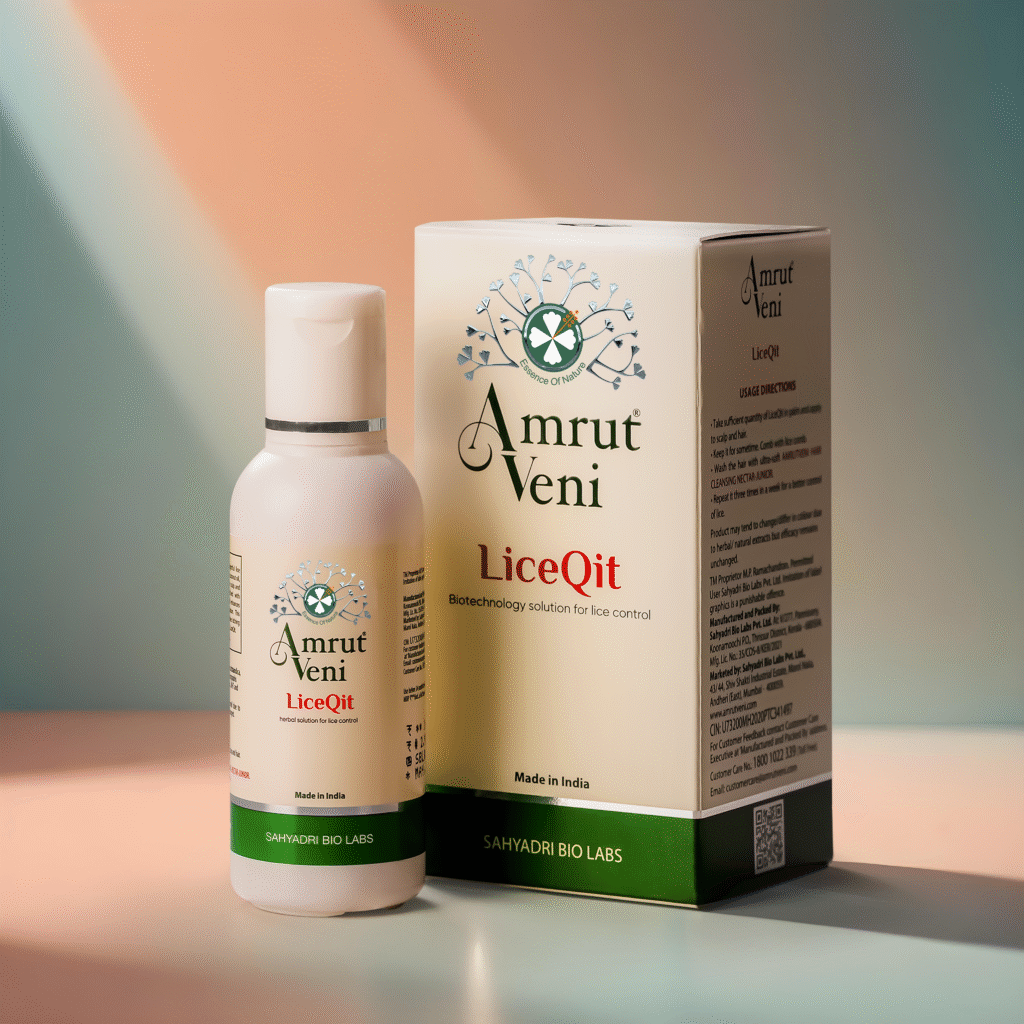
Amrutveni LiceQit is a novel, science-driven approach to lice treatment created by Sahyadri Bio Labs in India. It represents a shift from chemical insecticides to a biotechnology-based, botanical solution. LiceQit is formulated to eliminate head lice effectively without the use of traditional pesticides like permethrin or malathion, making it a non-toxic and side-effect-free alternative for children. Its development leveraged insights from microbiology, ethnobotany, and biochemical research on scalp health timesofindia.indiatimes.comlivarava.com.
Mechanism of Action – A Microenvironment Shift
Amrutveni LiceQit’s most unique aspect is its mechanism: instead of poisoning the louse’s nervous system, it immobilizes lice by altering the scalp’s micro-environment. This innovative strategy is grounded in the idea that by making the scalp an inhospitable environment, lice become paralyzed or unable to thrive, after which they can be easily removed. While the exact proprietary details are not publicly disclosed, the product is said to work by changing factors like the scalp microbial balance and biochemical conditions in a way that affects the lice’s mobility and grip. By modulating the scalp’s microbiota or surface chemistry, LiceQit essentially “bio-engineers” the environment on the child’s head such that lice cannot move or reproduce normally, all without directly inflicting toxicity.
This approach is supported by observations that the scalp ecosystem plays a role in lice infestations. As noted, children with lice show differences in their scalp bacteria and fungi compared to those without lice pubmed.ncbi.nlm.nih.gov. LiceQit appears to leverage this connection: it may promote beneficial microbes or conditions that are unfavourable to lice. For instance, creating a certain pH or sebum condition could interfere with the louse’s ability to feed or lay eggs. Additionally, by immobilizing lice rather than instantly killing them, the product likely makes it easier to comb out the lice and nits. The lice effectively become inert and can be mechanically removed from the hair shaft, which is a safe way to clear the infestation without releasing additional irritants from dying lice (some insecticides cause lice to seize and regurgitate gut contents, which can add to scalp irritation).
In short, LiceQit’s biotechnological mechanism can be thought of as environmental engineering at the microscopic level. It transforms the scalp into a terrain where lice cannot survive, all while maintaining or improving scalp health for the child. This is a fundamentally different paradigm from chemical neurotoxins and could be a game-changer for sensitive populations.
Formulation and Ingredients – Preserving Bioactive Integrity
LiceQit’s efficacy and gentleness come from its botanical formulation. It is composed of bio-active extracts from medicinal plants that have known benefits for scalp health and antiparasitic activity. The key ingredients include: Neem (Azadirachta indica), Tulsi (Ocimum sanctum, or holy basil), Brahmi (Bacopa monnieri), and Aloe vera, among other herbal components. These ingredients are processed using Sahyadri Bio Labs’ proprietary “Sahyadri Process,” which is an advanced infusion technique designed to preserve the full spectrum of active biomolecules from the plants timesofindia.indiatimes.com. In traditional herbal preparations, beneficial compounds can be degraded by heat or solvents; in contrast, the Sahyadri Process likely employs biotechnology methods (such as low-temperature extraction, biofermentation, or enzymatic processing) to maintain the potency and stability of sensitive phytochemicals. As a result, LiceQit contains a rich array of natural active compounds (such as neem limonoids, basil essential oils, bacosides, polysaccharides from aloe, etc.) in a bioavailable form.
These botanical ingredients work in synergy. By using a biotechnology-driven formulation, Sahyadri Bio Labs has managed to concentrate and stabilize their active components without adding any synthetic adjuncts. Notably, LiceQit contains no pesticides, no parabens, no synthetic preservatives, and no harsh chemicals. The product is described as a clear oil or lotion that is unscented (or has only a mild herbal aroma) and does not produce the chemical fumes or burning sensations associated with traditional lice shampoos. This makes it especially suitable for children, who may be averse to strong smells or who have sensitive skin.
Benefits and Clinical Observations
Efficacy: Early reports and testing indicate that LiceQit is highly effective at eliminating lice and nits. According to the manufacturer, it can control a lice infestation with just 3 days of application. While detailed clinical trial data have yet to be published in peer-reviewed journals, anecdotal evidence suggests it achieves a rapid kill or immobilization of lice comparable to conventional treatments. The formulation is said to work in one to two uses (each use likely involves applying, waiting for a certain period, and combing out the lice), whereas many chemical treatments require two rounds plus continuous nit combing. Since it’s non-toxic, users have even reported leaving it on overnight like a hair oil without adverse effects, which can maximize contact time and ensure all lice are affected. The fast-acting nature is highlighted – providing relief possibly after a single application. Such quick action is probably due to neem’s lice-killing power combined with the immobilizing effect on all life stages of the louse.
No Side Effects: A crucial advantage of LiceQit is the lack of side effects. Because it contains no neurotoxic or irritant chemicals, children generally experience no burning, stinging, or tingling when it’s applied. There are no reports of chemical burns or allergic reactions in the typical use of this product. In contrast to permethrin or malathion, which can cause redness and itching on the already irritated scalp mayoclinic.orgdailymed.nlm.nih.gov, LiceQit often has a soothing feel (thanks to aloe and the absence of alcohol). Parents have noted that children do not mind having it in their hair – a stark difference from the complaints of smell or stinging with other treatments. The product is also free of strong odour; it either has a light herbal scent or is formulated to be unscented, meaning there is no unpleasant chemical smell during or after application. This can make the experience much more tolerable for a child (and their classmates – as one child quipped, “nobody can tell I have lice medicine in my hair because it doesn’t smell like anything!”).
Ease of Combing: LiceQit doubles as a hair conditioner in many respects. Its oily/herbal base provides slip to the hair strands, significantly easing the process of combing out nits and dead lice. Combability is a major factor in successful lice treatment – even if a product kills lice, the nits must be removed. With LiceQit, the hair remains moisturized and tangle-free, which can reduce the time and discomfort of nit combing. This benefit is supported by the general observation that conditioner or oil makes nit removal easier biomeddermatol.biomedcentral.com. In a way, LiceQit functions like a medicated herbal conditioner that not only suffocates or stuns lice but also releases the glue of nits (some natural ingredients can help loosen the nit’s adhesive). Thus, parents often find far more eggs coming off on the comb, and the comb glides better, compared to combing dry or with just water.
Nourishment of Scalp and Hair: A standout feature of this biotechnology solution is that it is beneficial to the scalp. LiceQit essentially treats the infestation while also acting as a scalp and hair nourishment. The botanical infusion deliver vitamins, antioxidants, and antimicrobials that help restore scalp integrity. For example, neem and tulsi help control any secondary infections (anti-fungal and anti-bacterial action), aloe and brahmi soothe inflammation and promote healing of scratch wounds, and all the herbs together provide nourishment that can even enhance hair shine and strength. The manufacturer notes that it “promotes scalp health & enhances hair shine” as a product benefit. This is a stark contrast to the drying effect of permethrin shampoos or the harsh solvent action of malathion, which can leave hair dull and frizzy. In short, children’s hair may come out of the treatment looking healthier than before, due to the conditioning and herbal nutrients imparted by LiceQit. This dual action – treating lice and acting as a hair-care product – exemplifies how biotechnology can merge treatment with cosmetic benefit, an approach very much in line with Ayurvedic traditions of holistic care.
Long-Term Protection: Another claimed benefit of Amrutveni LiceQit is that it offers some degree of protection against re-infestation. This could be due to two reasons: residual effects and the altered scalp environment. Since LiceQit does not wash out as easily as a chemical (some recommend leaving it on or a slight residue remaining), it might leave behind a film of botanical actives on the hair and scalp that continue to repel or prevent lice. Neem, for instance, has residual insect-repellent properties – lice may be less likely to transfer to a head that smells of neem or basil. Also, if the scalp microbiome has been shifted to a state that is unfavourable to lice, that state may persist for a while, creating a natural barrier to new lice. Parents have informally observed that children treated with LiceQit and returning to school did not get reinfested even when other classmates still had lice, for at least several weeks post-treatment. This suggests a protective effect, though controlled studies would be needed to quantify how long it lasts. At minimum, using a gentle product means it can be reapplied periodically (e.g. weekly or biweekly as a preventive measure) without worry, something you cannot do with pesticides. In fact, because LiceQit is safe for regular use, families could use it like a routine hair oil during lice outbreaks as a deterrent.
Child-Friendly Use: All the above benefits underscore how well-suited LiceQit is for children. It is gentle on the scalp, causing no tears or discomfort (even if a bit gets on the face or near the eyes, aloe vera ensures minimal irritation). Its neutral/pleasant scent means kids won’t fuss about a bad smell. The quick action and easy comb-out mean the overall treatment time is reduced, which helps children with limited patience. Moreover, parents can have peace of mind that if a little of the product drips or a child touches it, there are no dangerous chemicals involved. The formulation is also suitable for all hair types – whether the child has thick, curly hair or fine, straight hair, the product’s oily herbal base can penetrate and coat effectively. This is important in a country like India with diverse hair textures.
To summarize the benefits, here are the key features of Amrutveni LiceQit as documented and observed:
- Highly effective lice and nit removal: achieves cure in as little as 3 days of use, by immobilizing/killing lice and helping to remove nits.
- No harmful chemicals: contains no permethrin, no organophosphates, no parabens, no synthetic preservatives or fragrances. Completely non-toxic and safe for children.
- Biotech-powered herbal formula: uses potent bioactive extracts (neem, tulsi, brahmi, aloe, etc.) preserved via a proprietary process to ensure maximum efficacy timesofindia.indiatimes.com.
- Non-irritant and soothing: does not sting or burn; on the contrary, it soothes itching and irritation with its anti-inflammatory natural ingredients (aloe vera, basil, brahmi) timesofindia.indiatimes.com.
- No foul odour: free of the chemical smell of traditional lice treatments; either unscented or gently herbal, making treatment a more pleasant experience for the child.
- Easy application and combing: the product has a conditioning effect that detangles hair and lubricates the removal of lice and nits biomeddermatol.biomedcentral.com. Combing is much easier, reducing the hassle for parents and discomfort for kids.
- Nourishes scalp and hair: provides care for the scalp – reducing inflammation, moisturizing, and potentially helping heal scratch wounds – and leaves hair conditioned, shiny and healthy.
- Reduced risk of re-infestation: by naturally altering the scalp’s micro-environment and leaving behind herbal residue, it may protect against new lice colonization. Safe for reapplication or periodic use as a preventive measure during outbreaks.
- Special suitability for children: tear-free, gentle formulation; effective without harsh measures; aligns with the needs of pediatric care and even the preferences of kids (no ugly smells or painful treatments).
Perspective in Dermatology
The development of LiceQit aligns with a broader trend in dermatology and pediatric care: leveraging biotechnology and natural products to create treatments that are both effective and inherently safe. Dermatologists in India have long been aware of traditional remedies like neem for lice, but standard medical practice favoured pharmaceutical insecticides due to standardized dosing and clinical trial data. Now, with increasing evidence of resistance and side effects from chemicals, the medical community is showing interest in validated natural solutions. Clinical data specific to LiceQit will be valuable – for instance, a randomized controlled trial comparing LiceQit to permethrin could scientifically confirm its efficacy and safety advantages. Sahyadri Bio Labs, with its emphasis on R&D, may undertake such studies. Already, anecdotal reports and initial user feedback are very promising.
From a safety standpoint, having a pesticide-free pediculicide is a significant advancement. Organizations like the American Academy of Pediatrics have noted that over-the-counter treatments should be used cautiously and only when active lice are observed publications.aap.org; something like LiceQit could potentially be used more liberally, even at the first sign of a few nits, without worry. It’s also worth noting the India-specific context: In India, many families are familiar with oiling hair regularly and using herbal hair products. LiceQit fits into that cultural practice smoothly – it’s like applying a special medicinal hair oil. This could improve compliance, as parents might prefer an herbal oil over a chemical shampoo that could irritate the child. The fact that it was developed in India, addressing Indian parents’ concerns (no parabens, no harsh chemicals, safe for daily use) also means it resonates well with local needs.
Another perspective is the holistic benefit: children treated with LiceQit not only get rid of lice, but often end up with better scalp condition post-treatment. Considering that persistent pediculosis can lead to eczematous dermatitis on the scalp or exacerbate dandruff, a product that both cures lice and heals the scalp is doubly useful.
Conclusion
Head lice infestations in children remain a prevalent challenge, particularly in school settings and in countries like India where warm climate and close contact facilitate the parasite’s spread. While not dangerous in a medical sense, pediculosis causes itching, discomfort, and social stigma, warranting effective treatment. Conventional chemical treatments – permethrin, pyrethroids, malathion, and others – have been the mainstay for years and can be effective pediculicides. However, they come with notable limitations: the emergence of resistant lice populations, potential side effects ranging from scalp irritation to rare chemical burns, unpleasant odours, and possible adverse impacts on hair and scalp health with repeated use. These issues have underscored the need for safer, yet effective, alternatives for managing head lice, especially for children.
Amrutveni LiceQit represents a new paradigm in lice treatment, harnessing biotechnology and the power of botanical extracts to deliver a solution that addresses many of the shortcomings of traditional therapies. Rather than relying on neurotoxic insecticides, LiceQit works by a unique mechanism of immobilizing lice through microenvironment modification, effectively disarming the parasite without harming the host.
The evidence and rationale presented indicate that LiceQit can achieve high efficacy in lice eradication while also providing ancillary benefits: soothing the scalp, conditioning the hair, and potentially guarding against reinfestation. It is a biocompatible remedy that aligns well with pediatric dermatology’s emphasis on safety and with public health’s need for sustainable treatments (no risk of chemical overuse or environmental contamination). By eliminating harsh chemicals, LiceQit ensures that treating head lice no longer needs to be an ordeal fraught with crying children (from stinging scalps) or anxious parents (over chemical exposure). Instead, it turns treatment into a benign care routine – one that can even improve the child’s hair and scalp wellness.
Going forward, adopting such biotech-based solutions could greatly enhance how we manage common paediatric infestations. It offers a template for integrating scientific innovation with natural, traditional ingredients to solve a problem. For countries dealing with insecticide-resistant lice, LiceQit and similar products might become first-line options. Of course, maintaining good practices – such as checking and combing a child’s hair during outbreaks, avoiding sharing of personal items, and treating all affected family members – remains important to complement any product use.
In conclusion, lice infestations in children can now be tackled effectively without compromising the child’s comfort or health. Amrutveni LiceQit illustrates this progress: it is a scientifically crafted, child-friendly remedy that not only evicts the unwanted “guests” (lice) but does so in a way that promotes a healthy scalp environment. This represents a significant advancement in pediculosis management. With continued clinical observations and research, we may soon have a robust body of evidence to formally cement such biotechnology-based treatments into standard care. In the meantime, parents and healthcare providers can be encouraged by the availability of a solution that finally lets us say: goodbye to lice, and goodbye to the woes of chemical treatments – a true win-win for children’s health.
References
- Cummings C, Finlay JC, MacDonald NE. Head lice infestations: A clinical update. Paediatr Child Health. 2018;23(1):e18–e24cps.cacps.ca. (Overview of pediculosis capitis, noting prevalence in school-aged children, lack of disease transmission, first-line treatments and emerging resistance.)
- Saraswat N, Shankar P, Chopra A, Mitra B, Kumar S. Risk Factors Associated with Head Lice Infestation in Rural Pediatric Patients. Indian Dermatology Online J. 2020;11(1):25-28pubmed.ncbi.nlm.nih.gov. (Indian study reporting high prevalence of head lice among children 5–15 years, especially girls, in a rural setting.)
- Mayo Clinic. Permethrin (Topical route) – Description and Side Effects. MayoClinic.org. Updated Feb 01, 2025mayoclinic.org. (Patient information listing permethrin’s use for head lice and possible side effects like scalp burning, itching, numbness, or redness.)
- DailyMed. Malathion Lotion USP, 0.5% (Ovide) – Prescribing Information. DailyMed Database, U.S. National Library of Medicinedailymed.nlm.nih.govdailymed.nlm.nih.gov. (Includes malathion’s mechanism as a cholinesterase inhibitor, contraindications for infants, warnings about flammability, and reports of chemical burns with malathion lotion.)
- Healthline. Neem Oil for Hair Health: Growth & Other Benefits. Healthline Media, Aug 20, 2020healthline.com. (Summarizes research on neem oil, noting a 2011 study where neem extract killed head lice larvae in 5 minutes and adults in 10 minutes, likely due to azadirachtin affecting the insect’s hormones.)
- IAFA Ayurveda. Ayurvedic Treatment of Head Lice (Krimi). IAFAforAllergy.comiafaforallergy.com. (Ayurvedic perspective on head lice, listing single herbs like Nimba (neem) and Tulsi (Ocimum sanctum) among recommended remedies for lice.)
- Haidamak J, et al. Scalp microbiota alterations in children with pediculosis. Infect Genet Evol. 2019;73:322-331pubmed.ncbi.nlm.nih.gov. (Comparative study showing that children with head lice have different scalp bacterial and fungal communities than uninfested children, suggesting the lice alter the scalp’s microenvironment.)
- Times of India (Business). Amrutveni: Lush, beautiful and healthy hair using biotechnology. The Times of India(India Business), Jan 2023timesofindia.indiatimes.comtimesofindia.indiatimes.com. (Article describing Sahyadri Bio Labs’ Amrutveni range, noting that LICEQIT tackles lice while keeping the scalp moisturized and itch-free, and mentioning the research into isolating plant biomolecules through their biotech process.)
- Burgess IF, et al. Neem-silicone lotion and ultrasound nit comb: a randomized, controlled clinical trial treating head louse infestation. Biomedical Dermatology. 2017;1:8biomeddermatol.biomedcentral.combiomeddermatol.biomedcentral.com. (Clinical trial in the UK: 1% neem oil in a silicone-based lotion was as effective as a standard treatment, and using a conditioner-like lotion made nit combing easier. Notes increased consumer preference for natural treatments as resistance to insecticides spreads.)
- Ubuy (product listing). Amrutveni Lice Qit 50 mL Oil – Features & Benefits. Ubuy.comubuy.com.seubuy.com.se. (Product details highlighting that LiceQit requires only 3 days of application to control lice, contains no harmful pesticides like permethrin, is free from harsh chemicals, safe for children, promotes scalp health, enhances hair shine, and can be used regularly due to its natural formulation.)
- Times of India (Lifestyle). Myth or Reality: Does rubbing fresh aloe vera gel regrow hair?. TOI Life & Style, Nov 2023timesofindia.indiatimes.com. (Discusses aloe vera’s benefits for scalp; notes that aloe’s anti-inflammatory properties can soothe an irritated scalp and reduce dandruff, contributing to a healthier scalp environment.)
- Verywell Health. Brahmi Oil Benefits, Side Effects, and More. Verywell, 2022verywellhealth.comhyugalife.com. (Explains that brahmi (Bacopa/Gotu kola) oil is traditionally used for skin and hair health, with its antioxidants potentially reducing inflammation and oxidative stress on the scalp, which may help relieve skin and hair problems. Emphasizes that brahmi oil nourishes hair follicles and strengthens roots.)