
Protecting Children’s Scalp Health: Harsh Shampoos vs. Gentle Biotech Solutions in India
Introduction
Children’s hair care in India often balances tradition and modern convenience. Many Indian parents still practice the champi ritual – massaging the child’s scalp with nourishing oils like coconut or amla – to strengthen hair and moisturize the scalp tucokids.com. However, this beneficial tradition can be undermined if followed by harsh chemical-based shampoos. Over-the-counter shampoos commonly used on children may contain strong detergents and synthetic additives that strip away the natural oils (sebum) and disturb the scalp’s delicate balance. Pediatric dermatologists and hair care experts warn that such shampoos can dry out the tender scalp, disrupt its microbiota, and even cause long-term hair issues gooddyeyoung.comjournals.lww.com. This article examines the negative effects of harsh shampoos on children’s scalp and hair – with a focus on the Indian context – and then explores an evidence-backed gentle alternative, Amrutveni Hair Cleansing Nectar Junior, which applies biotechnology to traditional wisdom.
Harsh Chemical Shampoos and Their Impact on Kids’ Scalp & Hair
Stripping Natural Oils and Moisture: Children’s scalps produce less sebum than those of adolescents, since sebaceous activity surges only at puberty pmc.ncbi.nlm.nih.gov. This means a child’s limited natural oils are precious for keeping their scalp and hair hydrated. Unfortunately, many mass-market shampoos contain sulphate surfactants (like SLS, sodium lauryl sulfate) that aggressively cleanse by dissolving oils. These harsh detergents strip away the scalp’s sebum and lipids, leaving the scalp and hair overly dry gooddyeyoung.com. Pediatric skin experts note that cleansing with such surfactant-rich products is often associated with dryness, irritation, and even redness of the skin journals.lww.com. In effect, using an adult-strength or chemical-laden shampoo on a child can eliminate the very oils that protect their scalp, making it feel “squeaky clean” but also dry and unprotected. Over-cleansing can also trigger a rebound effect – the scalp might overproduce oil to compensate, or alternatively remain persistently dry and flaky gooddyeyoung.com.
Disrupting the Scalp’s Microbiome: The scalp is host to a community of beneficial microbes (its microbiome) that help guard against harmful bacteria and fungi. A healthy microbiome and intact sebum layer keep issues like dandruff and dermatitis in check. Research indicates that harsh shampoo ingredients such as sulphates, parabens, and synthetic fragrances can disrupt this microbial balance gooddyeyoung.com. By altering scalp pH and removing natural oils, these chemicals create an environment where irritant or pathogenic microbes can flourish. An imbalanced scalp microbiota in children may manifest as more frequent scalp irritation, itchiness, or dandruff-like flaking. In contrast, using a gentle, pH-balanced cleanser helps preserve the beneficial microbes and the scalp’s first line of defense gooddyeyoung.com. Thus, regular shampoos that are too harsh can inadvertently wash away the “good” along with the “bad,” leaving a child’s scalp more vulnerable to infections and irritation.
Barrier Damage and Irritation: Children’s skin (including the scalp) is more sensitive and still developing its protective barrier function mustelausa.com. Strong cleansers not only remove oils but can damage proteins and lipids in the outer skin layer, compromising the scalp’s barrier. Studies on cleansers show that harsh surfactants can bind to the skin’s proteins, causing swelling of cells and post-wash tightness and itch journals.lww.comjournals.lww.com. As the scalp’s moisture barrier is broken down, water is lost from the skin, leading to dryness and micro-inflammation. Parents might notice their child’s scalp getting red or the child scratching their head after shampooing – signs of irritation from the product. In fact, dermatology literature emphasizes that cleansers with strong detergents often cause irritation, dryness, erythema (redness), and a tight feeling of the skin after washing journals.lww.com. This is one reason pediatricians advise using mild, fragrance-free shampoos for babies and young kids to avoid disrupting the developing skin barrier cerave.com. Unfortunately, not all “kids’ shampoos” on the market meet these criteria, and many still contain potential irritants.
Loss of Protective Sebum & Microbial Imbalance – The Indian Context: In India’s climate, maintaining scalp moisture is crucial. Many regions have hard water with high mineral content, which can exacerbate the harshness of shampoos. Washing with hard water causes greater deposition of irritant surfactants on the skin and can further impair the skin barrier sciencedirect.com. This means an Indian child bathing with a sulphate-laden shampoo in hard water might experience even more dryness or irritation than expected. Culturally, Indian parents often oil a child’s hair before washing (the champi ritual), which is intended to nourish the scalp and protect it from drying out tucokids.com. However, if a strong shampoo “cuts” through all the oil and natural sebum, it defeats the purpose of oiling, leaving the scalp devoid of moisture. The result can be a tender scalp that is prone to flakiness (mimicking dandruff) and a child’s hair that feels brittle or frizzy to touch. Over time, repeated use of such shampoos may contribute to weaker hair fibers – the hair cuticle can get damaged and lifted, leading to breakage and split ends. In fact, hair experts note that certain chemicals in shampoos (and environmental stressors) can weaken the hair shaft’s cortex, eventually making hair so fragile that it breaks easily americanhairloss.org. Thus, what starts as a daily hygiene routine could evolve into long-term hair quality issues.
Hidden Toxins in Kids’ Products: Perhaps most alarming is the presence of concealed harsh chemicals in children’s personal care products. A report by the Campaign for Safer Cosmetics found that 61% of children’s bath products tested contained both formaldehyde and 1,4-dioxane yarokhair.com – two chemicals you’d never expect in a baby or kids’ shampoo. Formaldehyde (or chemicals that release formaldehyde over time as preservatives) is a known carcinogen and skin irritant; even low exposures can cause burning sensations in the eyes, nose, and skin irritation yarokhair.com. Meanwhile, 1,4-dioxane is a suspected carcinogenic contaminant that can be generated during the production of common shampoo ingredients (like SLES, a sulphate). These findings underline a disconnect between the gentle, safe image of kids’ shampoos and their actual contents. Parents and healthcare professionals are rightfully concerned: repeated exposure to such toxins during childhood could pose health risks down the line. Pediatric experts advise families to “seek hair products with natural ingredients and avoid synthetic ingredients as much as possible” to minimize these risks consumerreports.orgcerave.com. In summary, conventional shampoos – even some marketed for kids – can irritate a child’s scalp, dry it out by eliminating essential sebum, upset the microbial balance, and expose the child to unwanted chemicals. These factors together can set the stage for immediate discomfort (dry, itchy scalp) and potentially contribute to longer-term hair problems or sensitivities.
A Biotechnology-Based Gentle Alternative: Amrutveni Hair Cleansing Nectar Junior
Given the concerns above, it’s clear why parents and doctors are looking for safer, gentler alternatives. Amrutveni Hair Cleansing Nectar Junior is one such solution, designed specifically to care for children’s delicate scalps without the downsides of harsh chemicals. This product is the result of a unique convergence of traditional herbal knowledge and modern biotechnology research. Developed in India by Sahyadri Bio Labs, it aims to provide the cleansing efficacy of a shampoo while preserving the scalp’s natural health and promoting hair development.
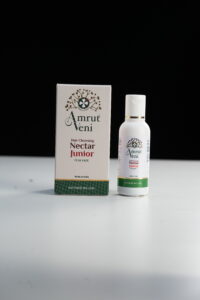
The Sahyadri Process – Preserving Bioactives: What sets Amrutveni’s formulation apart is the proprietary Sahyadri Process used to extract and preserve bioactive nutrients from herbs. A team of biotechnologists, trichologists, and microbiologists at Sahyadri Bio Labs spent years studying various medicinal plants and its effectiveness in supporting hair growth timesofindia.indiatimes.com. They identified plant-based biomolecules – including certain vitamins, minerals, antioxidants, and proteins – that nourish hair follicles and protect the scalp. Using advanced techniques, these beneficial compounds are isolated and infused into the hair cleanser without losing potency. According to the company’s research, the Sahyadri Process allows them to pack an array of natural nutrients into the product: vitamins A, B-complex, C, D, E, and K, as well as minerals like calcium, magnesium, zinc, iron, and others from herbal sources . These nutrients are essential for healthy hair growth and scalp metabolism. The formulation also contains a complex of plant-derived flavonoids, alkaloids, and essential amino acids (proteins) extracted straight from “life enhancing” herbs, which are traditionally acclaimed for hair care. All of these bioactives are then scientifically infused into a gentle base via the Sahyadri Process, which ensures their stability and availability to the scalp. In simpler terms, Amrutveni Hair Cleansing Nectar Junior delivers a “nutrient soup” to the scalp each time you wash, something ordinary chemical shampoos do not offer.
Nutrient-Rich, Herbal Ingredients: The key ingredients in this hair cleansing nectar read more like a herbal recipe than a chemical lab list. Although the full ingredient list is proprietary, the inclusion of botanical extracts such as hibiscus, aloe vera, holy basil (Ocimum sanctum), and others is evident from the product’s description and the company’s other hair formulations. These ingredients were likely chosen for their known benefits: for example, hibiscus extract is traditionally used to condition hair and is rich in mucilage that hydrates the scalp, while aloe vera has soothing and moisturizing properties that calm any irritation. Holy basil (Tulsi) provides antimicrobial benefits without upsetting the skin’s balance. Coconut-derived components are also used – instead of sodium lauryl sulphate, which is coconut-derived but harsh, the cleanser uses milder coconut-based surfactants and oils that clean without stripping. Hair care experts often recommend such natural oils and botanical extracts (coconut oil, olive oil, hibiscus, etc.) because they moisturize and nourish the scalp while cleansing gooddyeyoung.com. By formulating with these time-tested herbs and oils, Amrutveni Junior works in synergy with the traditional oiling practices – it cleanses away dirt and excess oil but leaves the scalp’s essential moisture intact. The result after washing is hair that is clean yet soft to touch, without the dry “stripped” feeling that many shampoos can cause.
Tear-Free, Sulfate-Free, Preservative-Free Formulation: Amrutveni Hair Cleansing Nectar Junior is explicitly marketed as tear-free and ultra-mild timesofindia.indiatimes.com. A tear-free shampoo implies that it’s been formulated to be non-irritating to the eyes and skin, which is crucial for children. This is achieved by avoiding harsh cleansers (no sulphates) and keeping the formula’s pH close to neutral so it doesn’t sting the eyes. In fact, the product contains no sulphates, parabens, or heavy preservatives at all timesofindia.indiatimes.com. By being sulphate-free, it avoids the primary culprit for sebum stripping and irritation. By being paraben-free and preservative-free, it sidesteps potential allergens or toxins like formaldehyde releasers. The cleanser relies on natural or safe alternatives to keep the product fresh – for example, it might use bio-based preservatives that are food-grade or naturally derived antioxidants to prevent spoilage. The absence of artificial fragrance is another likely aspect, given its geared for sensitive scalps (any scent is probably from the mild herbal extracts themselves). All these points align with dermatologists’ recommendations for children’s shampoo: gentle surfactants, no added fragrance or dyes, and minimal chemical load to avoid irritation cerave.comcerave.com. The Amrutveni cleanser’s ability to clean “thoroughly without making it feel dry or irritated – unlike regular shampoos” is a testament to its mild formulation. In practical terms, when using the product, parents notice it produces a light lather (since no SLS foam boost) and rinses out easily, leaving the hair manageable and the scalp comfortable.
Dermatologically Tested & Pediatric Safe: While specific clinical trial data for Amrutveni Junior may not be published in journals, the product is designed under expert supervision for use in children (recommended for age 3 and above) timesofindia.indiatimes.com. The company emphasizes that its products are backed by research in biotechnology and are often tested for safety. In the development of the Amrutveni line, scientists and trichologists examined factors like scalp sensitivity, allergenicity of ingredients, and ideal pH for scalp health timesofindia.indiatimes.com. The Junior cleanser in particular would have undergone patch testing and use testing to ensure it does not cause irritation on children’s skin. The dermatological and pediatric safety benefits of such a formulation are significant: there are fewer risks of allergic reactions, contact dermatitis, or exacerbation of conditions like eczema. For instance, a child with eczema or very sensitive skin might tolerate this herbal-based wash far better than a standard perfumed shampoo, owing to the lack of harsh chemicals. Additionally, because it preserves the scalp’s moisture, children are less likely to experience the cycle of dry scalp and reactive oil overproduction that can sometimes lead to conditions like seborrheic dermatitis. The gentle nature of the cleanser also means no more tears during bath time, which is a relief for both kids and parents. From a healthcare perspective, using a tear-free, irritant-free shampoo on a child helps maintain the integrity of the scalp barrier, potentially reducing the need for medicated treatments for dryness or itching.
Supporting Long-Term Hair Health: One of the promises of Amrutveni Hair Cleansing Nectar Junior is that it not only avoids damage, but actively improves hair and scalp health with each use. By regularly supplying vitamins and minerals essential to hair follicles – such as biotin (vitamin B7) for keratin production, vitamin E and selenium for antioxidant protection of the scalp, etc. – the product creates a nourishing environment for hair to grow. This could translate to better hair density and strength as the child grows. While a child’s hair thickness and growth rate are largely determined by genetics and age, ensuring their scalp is healthy and well-nourished can optimize their natural potential. For example, minerals like zinc and iron are vital for hair growth, and deficiencies in these can cause hair to be weak; Amrutveni’s herbal ingredients rich in such minerals help guard against that. Moreover, the flavonoids and other phytochemicals from herbs provide anti-inflammatory and antimicrobial benefits in a gentle way. Over long-term use, parents might observe that their child’s scalp has fewer issues (less dryness, no frequent dandruff) and the hair maintains a soft, shiny quality, reducing the need for additional conditioners or treatments. An analogy can be drawn to using a gentle, nutrient-rich diet for the hair – just as a balanced diet keeps a child healthy, a balanced hair cleanser keeps their scalp ecosystem healthy. Notably, Amrutveni’s adult range has been scientifically and clinically evaluated (for instance, their formulations for men and women have shown improved hair growth outcomes by targeting hormonal and nutritional factors) timesofindia.indiatimes.comfacebook.com. This science-backed approach trickles down to the Junior product as well, giving confidence that it’s not just folk medicine but a well-engineered solution.
Conclusion
Harsh chemical-based shampoos, though ubiquitous and convenient, pose significant risks to children’s delicate scalp and hair. The Indian context – with its mix of traditional hair care practices and modern lifestyle – highlights the need for cleansers that clean effectively without harming the scalp’s natural oils, microbiome, or structural integrity. We have seen that typical shampoos can over-dry the scalp by stripping sebum, cause irritation and barrier damage, upset the microbial balance leading to issues like itch or flakiness, and even introduce unwelcome chemicals to a child’s body. For healthcare professionals, this underlines a preventative approach: recommending gentler, safer hair care options for pediatric patients to avoid dermatological problems. For parents, awareness of ingredients and their effects is key – reading labels and choosing products that are free from sulphates, parabens, and known irritants can make a big difference in a child’s hair and skin health.
Amrutveni Hair Cleansing Nectar Junior emerges as a compelling alternative grounded in biotechnology. By harnessing herbal bioactives through the Sahyadri Process, it offers a shampoo that doubles as a scalp tonic – cleansing without over-cleansing, and nourishing without overloading. The product’s tear-free, sulphate-free formulation speaks to its gentleness, and its enriched nutrients speak to its purpose of improving hair health. For Indian parents who want the best of both worlds – the safety of traditional natural ingredients and the efficacy of scientific innovation – this cleanser provides a viable, evidence-supported option. In practice, switching to such a gentle cleanser can mean fewer complaints of “Mummy, my head is itchy” or “Papa, my hair is so rough,” and more days of children sporting naturally shiny, healthy hair.
In summary, protecting children’s scalp and hair requires a mindful choice of products. The long-term outcomes of starting gentle, bioactive-rich hair care early in life can include not only healthier hair in childhood but also the foundation for robust hair growth in later years. With solutions like Amrutveni Hair Cleansing Nectar Junior, Indian parents and healthcare providers can work together to ensure that hair cleansing is a nurturing step, not a damaging one, in a child’s hygiene routine. By eliminating harsh chemicals and embracing nature-backed science, we safeguard our children’s scalps today – and their beautiful hair of tomorrow – with confidence and care.
References and Sources
- Campaign for Safer Cosmetics. Chemicals in Children’s Bath Products. (Finding: 61% contained formaldehyde and 1,4-dioxane)yarokhair.comyarokhair.com.
- Indian J. of Paediatric Dermatology (2015). Cleansers: To use or not to? (Noting surfactant cleansers cause skin dryness, irritation, barrier damage)journals.lww.comjournals.lww.com.
- Good Dye Young – Scalp Care 101. Why harsh shampoos harm scalp microbiome and cause dryness.gooddyeyoung.comgooddyeyoung.com.
- CeraVe Baby – Skincare Tips. Use mild, ceramide-based shampoos to protect infant skin barrier (avoid fragrances).cerave.comcerave.com.
- Sahyadri Bio Labs (Amrutveni) – Research Overview. Advanced biotechnology infusing vitamins (A, B, C, D, E, K) and minerals from herbs into hair care (Sahyadri Process).zipleaf.inzipleaf.in.
- Times of India (Business, 2023). “Lush, beautiful, and healthy hair using biotechnology” – Amrutveni brand launch (mentions sulfates/parabens-free gentle cleansers and tear-free kids’ product)timesofindia.indiatimes.comtimesofindia.indiatimes.com.
- Tuco Labs Blog (2025). Champi ritual for kids – Indian tradition of oil massage for hair strengthtucokids.com.
- American Hair Loss Assoc. – Hair Shaft Damage. Environmental and chemical factors (e.g., harsh shampoo) can weaken hair cortex leading to breakageamericanhairloss.org.
- Product information: Amrutveni Hair Cleansing Nectar Junior description (natural herbal-based, ultra-mild cleanser for children)amrutveni.comamazon.in.
- Company info: Sahyadri Bio Labs, India – Manufacturer of Amrutveni range (focus on biotech-engineered herbal hair care)timesofindia.indiatimes.comzipleaf.in.